
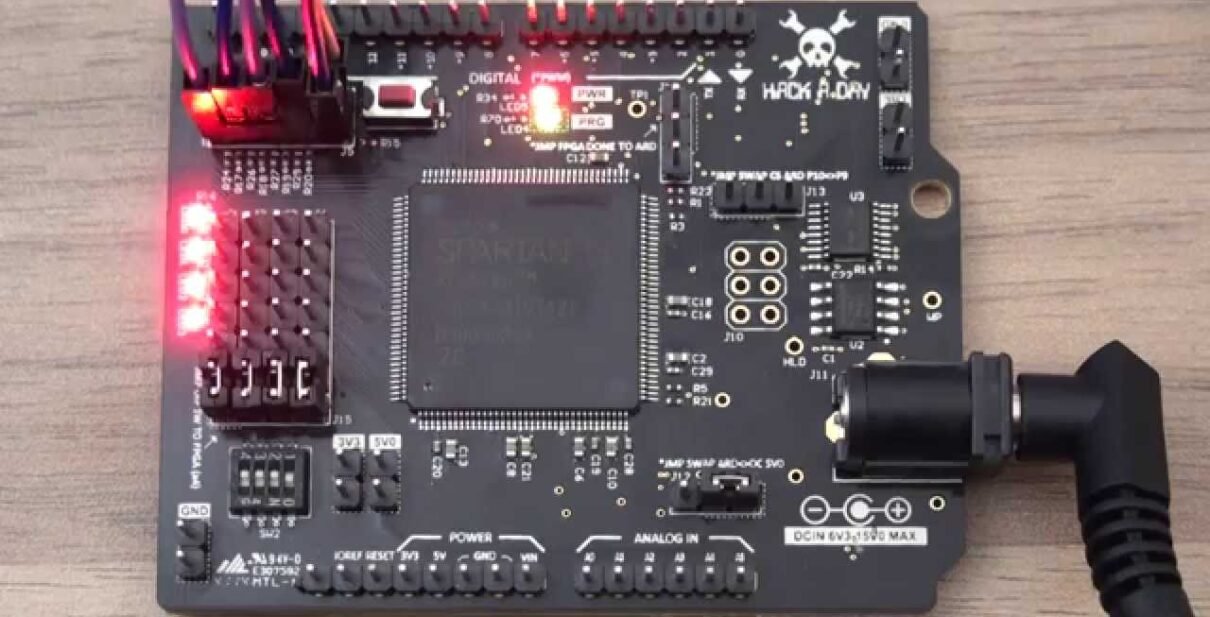
In the rapidly evolving landscape of defense and aerospace electronics, the choice between Field-Programmable Gate Arrays (FPGAs) and traditional processors represents one of the most critical architectural decisions facing system designers. This choice directly impacts performance, power consumption, reliability, and ultimately, mission success. Understanding when to leverage FPGAs versus traditional processors in mission-critical applications requires a deep analysis of technical requirements, operational constraints, and long-term system objectives.
Understanding the Fundamental Differences
Traditional Processors: The Sequential Approach
Traditional processors, including Central Processing Units (CPUs), Digital Signal Processors (DSPs), and Graphics Processing Units (GPUs), execute instructions sequentially or through parallel threads. These processors excel in applications requiring complex decision-making, sophisticated algorithms, and high-level programming flexibility. In defense applications, traditional processors are commonly found in mission computers, communication systems, and human-machine interfaces.
FPGAs: The Parallel Processing Paradigm
Field-Programmable Gate Arrays represent a fundamentally different approach to computation. Rather than executing software instructions, FPGAs implement hardware circuits that can be reconfigured to perform specific tasks. This architecture enables massive parallelism, deterministic timing, and ultra-low latency processing – characteristics that are often critical in defense and aerospace applications.
Performance Analysis in Real-World Defense Scenarios
Case Study 1: RADAR Signal Processing
In modern RADAR systems, the processing requirements are enormous. A typical airborne fire control radar might need to process hundreds of megahertz of bandwidth with microsecond response times. Traditional processors, even high-performance DSPs, often struggle with these requirements due to their sequential processing nature.
FPGA implementation of the same RADAR processing algorithms can achieve:
- 10-100x performance improvement in throughput-intensive operations
- Sub-microsecond latency for critical path processing
- Deterministic timing essential for accurate range and velocity measurements
- Power efficiency gains of 3-5x compared to equivalent DSP implementations
Case Study 2: Electronic Warfare (EW) Systems
Electronic warfare applications require real-time analysis of complex signal environments with rapid response capabilities. The ability to detect, classify, and respond to threats within milliseconds can mean the difference between mission success and failure.
FPGA advantages in EW applications:
- Parallel processing of multiple frequency bands simultaneously
- Real-time spectral analysis without buffering delays
- Instantaneous parameter extraction for threat identification
- Rapid reconfiguration to adapt to new threat signatures
Traditional processor advantages:
- Complex algorithm implementation for advanced threat classification
- Machine learning integration for adaptive threat recognition
- Flexible software updates for new threat databases
- Easier integration with existing command and control systems
Power Consumption: Critical for Airborne and Space Applications
Power consumption is often the limiting factor in airborne and space-based defense systems. Every watt of power consumption translates to additional cooling requirements, reduced battery life, or increased fuel consumption.
FPGA Power Characteristics:
- Static power consumption can be significant in advanced process nodes
- Dynamic power scales directly with utilization and clock frequency
- Power efficiency is excellent for compute-intensive, parallel operations
- Specialized low-power FPGAs available for battery-operated systems
Traditional Processor Power Characteristics:
- Idle power consumption typically higher than FPGAs
- Peak power can be very high during intensive computations
- Power management features like dynamic frequency scaling help optimize consumption
- Power efficiency varies significantly based on workload characteristics
Reliability and Fault Tolerance
Mission-critical defense systems must operate reliably in harsh environments including extreme temperatures, radiation, shock, and vibration. The reliability characteristics of FPGAs versus traditional processors differ significantly.
FPGA Reliability Advantages:
- No operating system eliminates a major source of software failures
- Deterministic behavior reduces unexpected failure modes
- Built-in redundancy can be implemented at the hardware level
- Radiation tolerance can be enhanced through design techniques
- Partial reconfiguration allows repair of damaged sections
Traditional Processor Reliability Considerations:
- Operating system complexity introduces potential failure points
- Software bugs can cause system failures or unexpected behavior
- Thermal management is critical due to high power densities
- Error correction features help mitigate memory corruption
- Graceful degradation capabilities through software adaptation
Development and Lifecycle Considerations
The total cost of ownership for defense systems includes not just initial development costs, but also long-term maintenance, upgrades, and technology refresh requirements.
FPGA Development Characteristics:
- Higher initial learning curve for hardware design teams
- Longer development cycles for complex algorithms
- Specialized development tools and simulation environments required
- Hardware verification is more complex than software testing
- Field updates possible through reconfiguration
Traditional Processor Development Characteristics:
- Familiar software development processes and tools
- Faster prototyping and algorithm development
- Extensive libraries and middleware available
- Standard debugging tools and development environments
- Easy field updates through software deployment
Cost Analysis Framework
Understanding the true cost implications requires analysis across multiple dimensions:
Development Costs:
- FPGA development typically requires 2-3x more engineering effort initially
- Traditional processor development leverages existing software expertise
- Verification and testing costs are generally higher for FPGA implementations
- Time-to-market considerations often favor traditional processors
Production Costs:
- FPGA unit costs can be higher, especially for low-volume production
- Traditional processors benefit from high-volume manufacturing economies
- System-level costs may favor FPGAs due to reduced component count
- Thermal management costs may be lower for FPGA implementations
Lifecycle Costs:
- FPGA field upgrades can extend system life without hardware changes
- Traditional processor systems may require more frequent hardware refreshes
- Maintenance costs depend on system complexity and field support requirements
- Technology obsolescence management strategies differ significantly
Emerging Trends and Future Considerations
Heterogeneous Computing Architectures
The future of mission-critical systems increasingly points toward heterogeneous architectures that combine the strengths of both FPGAs and traditional processors. Examples include:
- Zynq UltraScale+ devices combining ARM processors with FPGA fabric
- Intel Arria series with integrated ARM cores
- Custom SoCs designed for specific defense applications
AI and Machine Learning Integration
The integration of artificial intelligence in defense systems is driving new architectural considerations:
- FPGA-based AI accelerators for real-time inference
- GPU integration for training and complex AI algorithms
- Edge computing architectures combining multiple processing paradigms
- Neuromorphic computing as an emerging alternative
Decision Framework for System Architects
When choosing between FPGA and traditional processor architectures, system architects should evaluate:
Performance Requirements:
- Is real-time, deterministic processing critical?
- Are there massive parallel processing requirements?
- What are the latency constraints?
- How important is processing throughput versus flexibility?
System Constraints:
- What are the power consumption limits?
- Are there size, weight, and form factor restrictions?
- What environmental conditions must be tolerated?
- How critical is system reliability and availability?
Project Characteristics:
- What is the expected production volume?
- How important is time-to-market?
- What expertise is available on the development team?
- How frequently will the system require updates?
Conclusion
The choice between FPGAs and traditional processors in mission-critical defense applications is not simply a technical decision – it’s a strategic choice that impacts every aspect of system development, deployment, and lifecycle management. FPGAs excel in applications requiring high-performance parallel processing, deterministic timing, and power efficiency, while traditional processors provide advantages in flexibility, development speed, and complex algorithm implementation.
The most successful defense systems of the future will likely leverage hybrid architectures that combine the strengths of both approaches. As system requirements continue to evolve with emerging threats and advancing technologies, the ability to make informed architectural decisions based on thorough analysis of performance, power, reliability, and cost factors will be critical to mission success.
At Centaurus Technologies, our experience in both FPGA and traditional processor implementations enables us to provide optimal solutions tailored to specific mission requirements. By carefully analyzing each application’s unique characteristics, we help our clients achieve the perfect balance of performance, reliability, and cost-effectiveness in their most critical defense systems.


